






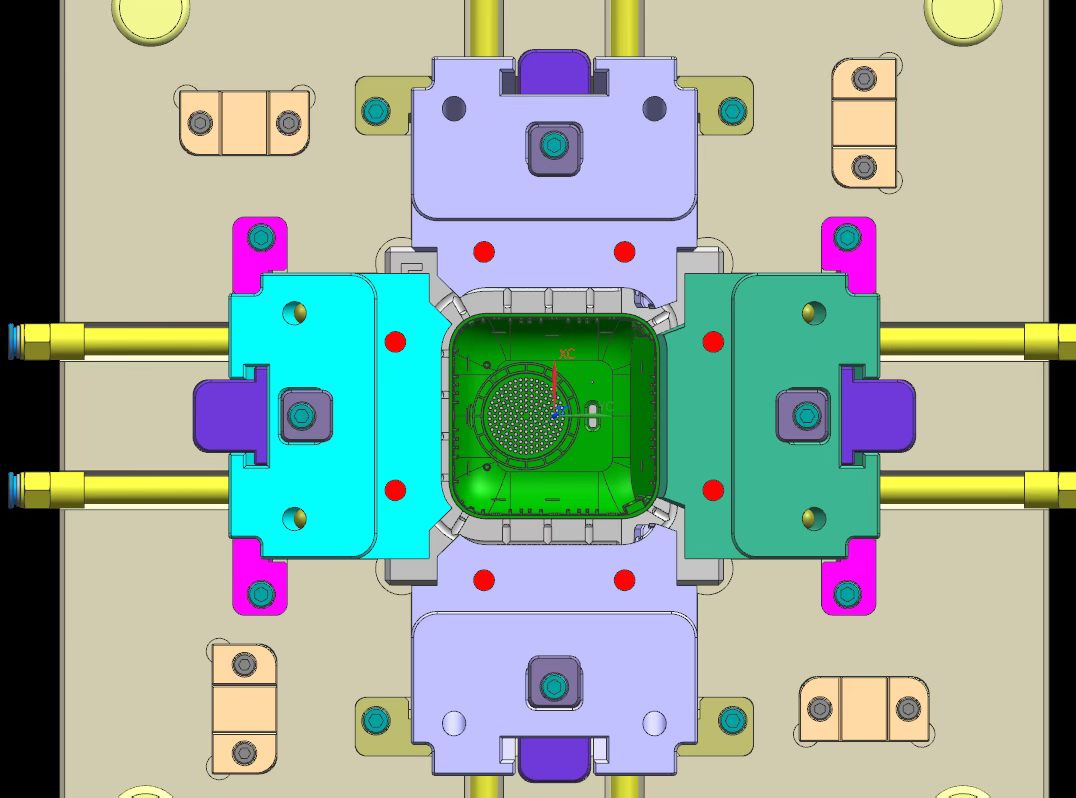

Electronics enclosure mold design: This article explains the key design, material, process, quality, and production considerations that engineers and sourcing teams should evaluate.
In the consumer electronics industry, the product enclosure not only provides structural strength and heat dissipation but also serves as a key expression of brand aesthetics. Achieving high-quality appearance while ensuring stable, high-volume production remains a core challenge in mold design.
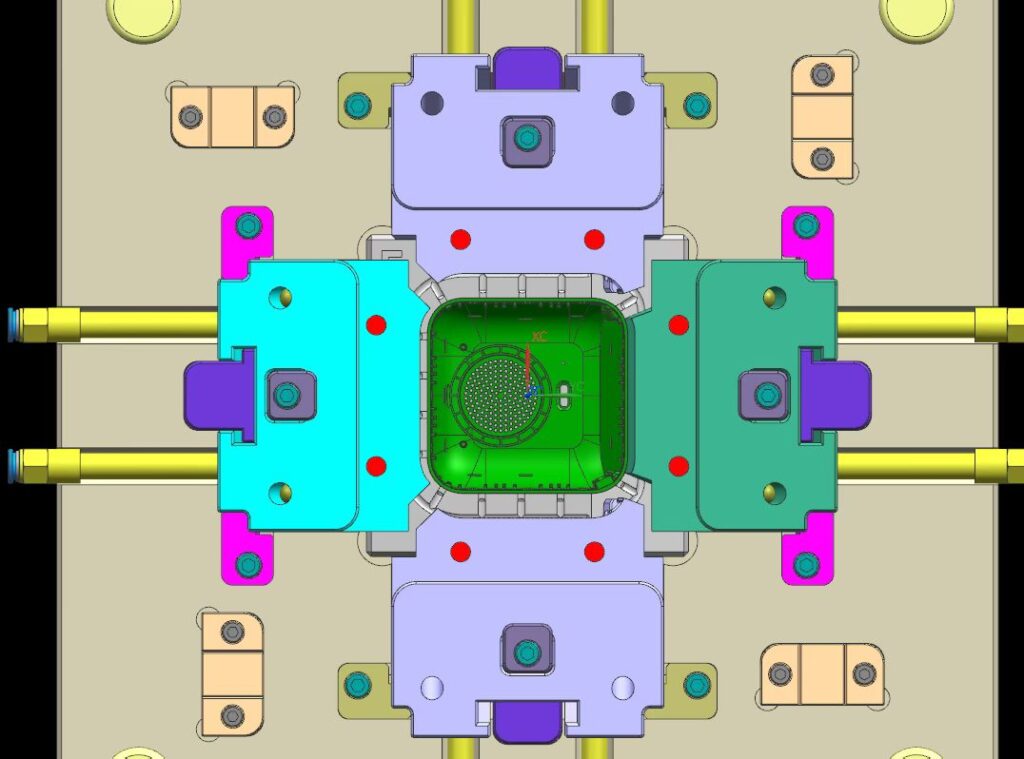
Project Case: Mold Design for a Brand’s TWS Earbuds Charging Case Enclosure
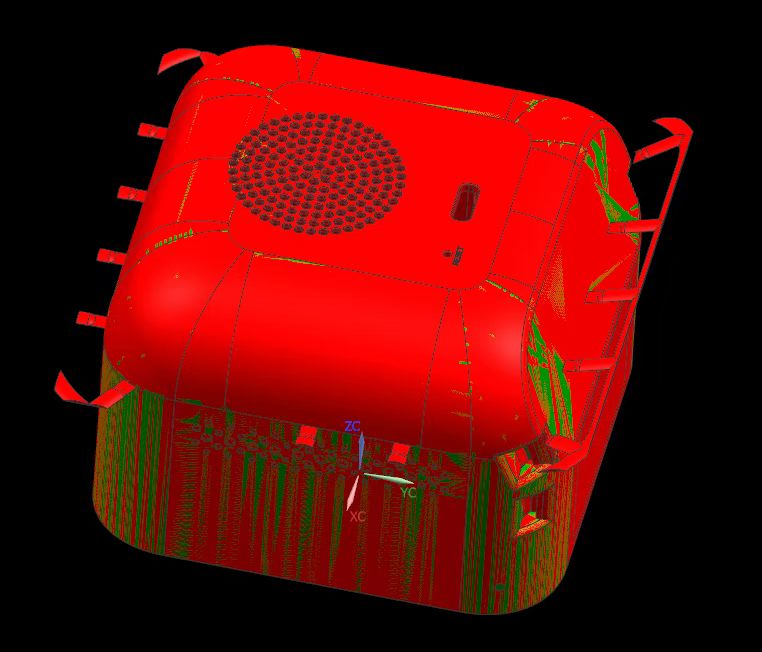
Take our recently completed project for a branded TWS earbuds charging case enclosure as an example. The part features a wall thickness of only 1.0 mm, with a high-gloss, mark‑free exterior surface and localized matte areas requiring a fine texture. During initial mold trials, we encountered significant warpage and visible weld lines on the side walls, which severely impacted cosmetic yield.
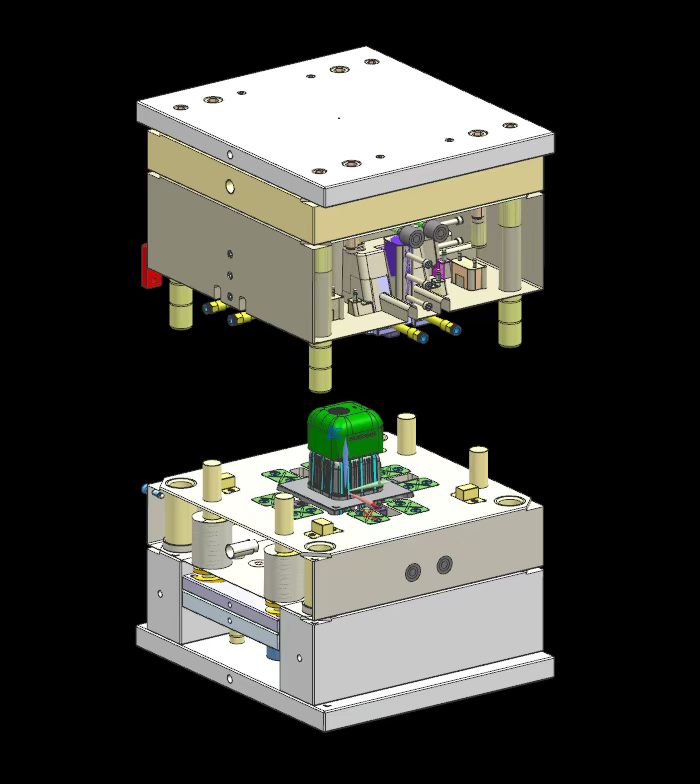
To address these issues, we implemented the following key measures:
- Mold Steel & Cooling System Optimization
Long-life mold steel was adopted, combined with a redesigned conformal cooling layout. This resulted in more uniform core temperature distribution and effectively minimized warpage of the thin‑wall part. - Mold Flow Analysis & Gate Location Adjustment
Multiple gating schemes were evaluated using mold flow analysis. A three‑pin sequential valve gate system was ultimately selected, enabling balanced melt front filling. Weld lines were shifted to non‑cosmetic areas or completely eliminated. - Fine‑Tuning of Process Parameters
Injection speed, holding pressure, and holding time were segmentally optimized based on mold flow results, resolving surface consistency challenges where high‑gloss and matte zones coexist on the same part.
Project Results
After the above optimizations, the TWS earbuds charging case enclosure achieved:
- Warpage controlled within ±0.05 mm;
- High‑gloss zones with a mirror‑like finish and matte zones with the desired fine texture – no visible weld lines;
- Cycle time reduced from 28 seconds to 21 seconds;
- Successful transition to mass production, with mold life reliably exceeding 1 million cycles.
Design Philosophy
Having designed dozens of molds for consumer electronics, we have come to realize that good mold design is not about finding the “most complex solution” – it is about striking the best balance between cost, cycle time, and yield for each specific project.
We welcome discussions with anyone interested in precision injection molding and mold structure optimization.