






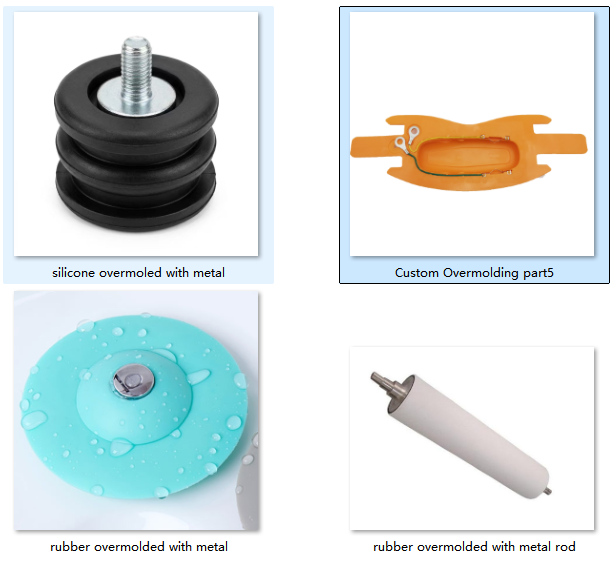

At RiLong, we don’t just mold silicone. We overmold it onto metal inserts — often for customers who have already been burned by delamination, shifting inserts, or invisible rejects.
Below are five practical lessons we’ve learned the hard way. If you’re sourcing metal insert overmolding with silicone, these are the questions you should ask any supplier.
1. The metal surface must be rough — but also perfectly clean
Silicone does not stick to a smooth, oily, or glossy metal surface.
✅ We do:
Shot blasting or chemical etching to create a micro‑rough anchor pattern.
❌ We avoid:
Touching the prepared surface with bare fingers. Grease from skin kills silicone‑to‑metal bonding instantly.
2. Primer is not optional — and too much is as bad as none
We use industrial‑grade primers (Chemlok, Mega, Thixon) applied in a very thin, uniform layer.
✅ The right way:
0.5–2 µm coating thickness, fully dried before loading into the mold.
❌ The wrong way:
Thick, uneven primer, or rushing to mold before the solvent has evaporated.
3. Metal inserts must be preheated and precisely positioned
Cold metal sucks heat out of the silicone during curing, resulting in weak silicone‑to‑metal bonding.
✅ We preheat inserts to near mold temperature (150–180°C) and fix them with mold pins or pockets.
❌ Common failure:
Insert moves during clamping → silicone flows where it shouldn’t → scrap.
4. Cure parameters are not “one size fits all”
Thin metal sections heat up fast; thick sections act as a heat sink.
✅ We use real‑time cavity temperature probes and adjust time/pressure per design.
We also run destructive peel tests on every new batch — not just a visual check.
❌ What we never do:
Set the timer once and hope for the best.
5. The best advice: involve us before you freeze the design
Many adhesion problems are designed in — sharp edges, uneven wall thickness, or inaccessible areas for primer.
✅ We offer DFM (Design for Manufacturing) feedback before tooling starts.
One small change in the metal part geometry can double silicone‑to‑metal bonding strength without increasing cost.
Metal insert overmolding with silicone is not “just pressing rubber against steel”.
It takes controlled roughness, precise chemistry, thermal discipline, and real‑shop experience.
We’ve paid the tuition. Now we deliver the results.
Interested in a technical discussion?
Contact Rilong at sales1@rilong-mold.com or sherry@rilong-mold.com for more detail ideas and solutions.