






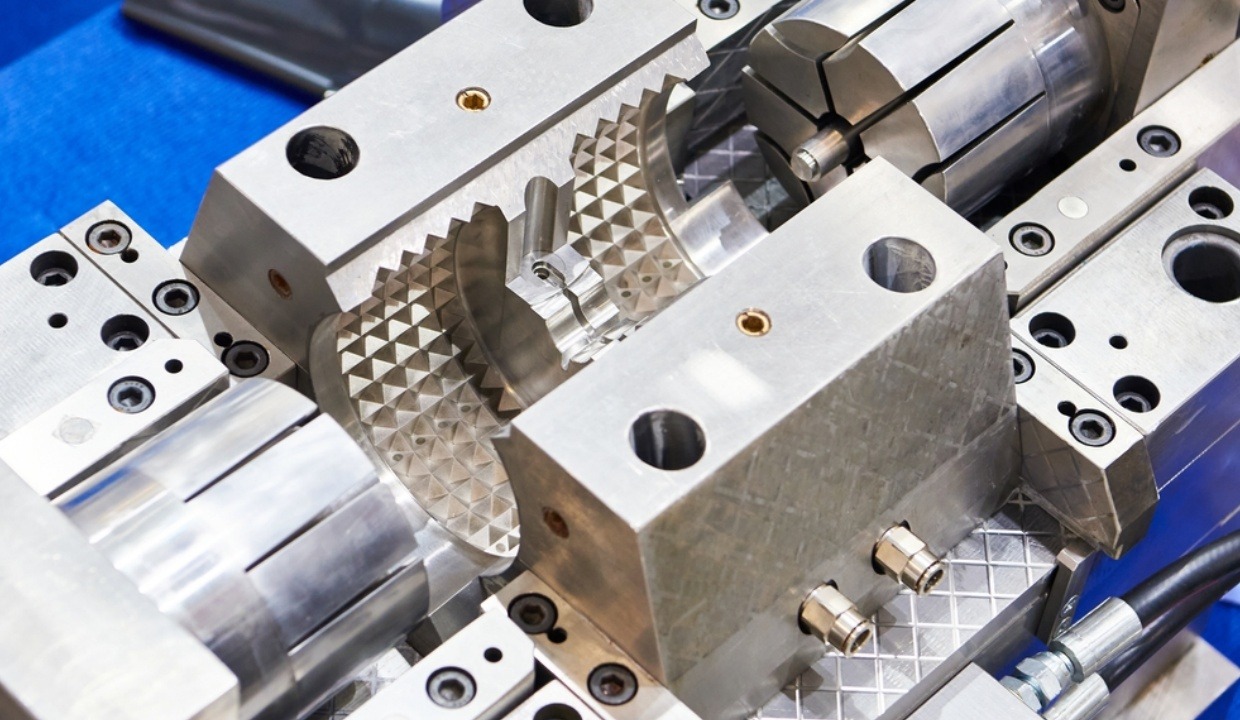

There is no single “best” injection molding material. The right choice is the specific commercial grade that meets the part’s mechanical, thermal, chemical, dimensional, appearance, regulatory, and production requirements at an acceptable total cost. A resin family name—such as ABS, PC, PA, or PP—is only the beginning of the specification.
This guide compares the most common injection molding materials and explains how an engineering team moves from product requirements to a moldable material grade. It is intended for designers and buyers preparing a new plastic part, reviewing a material substitution, or requesting an injection molding quotation.
What Materials Are Used in Injection Molding?
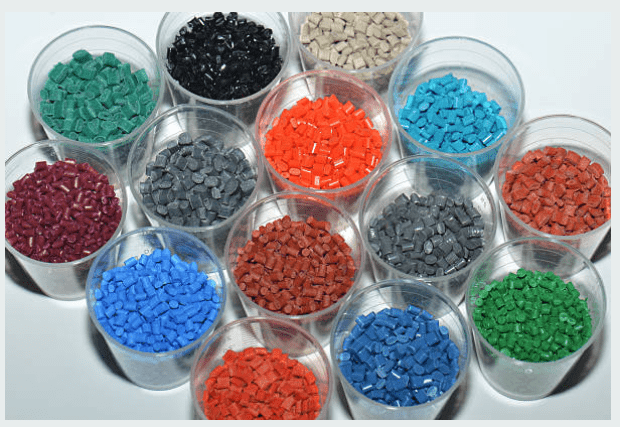
Most injection-molded plastic parts are made from thermoplastics. These polymers soften when heated and solidify when cooled, allowing pellets to be melted, injected, packed, and cooled in a mold. Commodity thermoplastics such as PP and PE serve cost-sensitive applications, while engineering plastics such as ABS, PC, PA, POM, and PBT provide a broader balance of strength, temperature capability, wear, appearance, or dimensional performance.
Thermoplastic elastomers (TPEs and TPUs) are processed like thermoplastics but provide rubber-like flexibility. Liquid silicone rubber (LSR) is a two-part reactive material that cures inside a heated mold and requires different metering, tooling, and process control. Thermoset injection molding also exists, but it should not be treated as interchangeable with conventional thermoplastic molding.
Within every family, grades may differ in molecular weight or flow, impact modification, UV stabilization, flame retardancy, glass or carbon fiber content, mineral filling, lubrication, color, and regulatory status. Two grades carrying the same polymer abbreviation can behave differently in the mold and in service.
Injection Molding Materials Comparison
The following table is a screening tool, not a substitute for a supplier datasheet or application testing. Properties vary by grade, conditioning, wall thickness, temperature, and test method.
| Material family | Typical strengths | Key limitations or processing concerns | Common applications |
|---|---|---|---|
| PP | Low density, chemical resistance, fatigue-hinge performance, cost efficiency | Relatively high shrinkage, creep, limited untreated UV resistance | Living hinges, caps, appliances, containers, automotive trim |
| PE (HDPE/LDPE) | Chemical resistance, toughness, low moisture uptake, low friction | Lower stiffness and heat capability; shrinkage and warpage require attention | Containers, closures, housings, fluid-handling parts |
| ABS | Impact balance, surface quality, colorability, general processability | Standard grades have limited weathering and moderate heat capability | Electronic housings, appliances, interior components |
| PC | High impact strength, heat capability, transparency in suitable grades | Must be dried; higher melt viscosity; chemical stress cracking requires evaluation | Protective covers, lenses, structural housings, lighting parts |
| PC/ABS | Balanced impact, heat, flow, and surface appearance | Drying and cosmetic process control; grade-specific chemical resistance | Automotive interiors, electronics, durable enclosures |
| PA (nylon) | Strength, wear resistance, fatigue performance, heat capability | Moisture changes dimensions and properties; drying is critical | Gears, bearings, clips, under-hood and structural parts |
| POM (acetal) | Low friction, wear, fatigue, stiffness, dimensional consistency | Limited adhesion; sensitive to overheating; processing discipline is essential | Gears, latches, valves, precision mechanisms |
| PBT | Electrical performance, chemical resistance, dimensional stability | Moisture-sensitive before molding; weld-line performance needs review | Connectors, switches, sensors, automotive electrical parts |
| PMMA (acrylic) | Optical clarity, gloss, UV weatherability, surface hardness | Lower impact toughness than PC; cosmetic defects are readily visible | Lenses, light guides, displays, transparent covers |
| TPE/TPU | Soft touch, flexibility, sealing, grip, overmolding options | Adhesion is substrate- and grade-specific; hardness and compression behavior vary | Grips, seals, boots, bumpers, flexible features |
| LSR | Elasticity, temperature range, sealing, selected biocompatible grades | Requires dedicated metering and heated-mold curing; flash control is demanding | Seals, medical components, baby products, electrical protection |
| PPS / PEEK / LCP | High-performance thermal, chemical, electrical, or dimensional behavior | High resin and processing cost; specialized tooling and equipment requirements | Electronics, medical, aerospace, and demanding industrial components |
Common Thermoplastic Injection Molding Materials
Polypropylene (PP)
PP is frequently selected for its low density, chemical resistance, and cost-performance balance. It is particularly useful for integral living hinges because appropriate grades tolerate repeated flexing. Homopolymer, random copolymer, impact copolymer, filled, and reinforced PP grades serve different requirements.
Design teams should account for shrinkage, creep under sustained load, and reduced outdoor life unless the grade is appropriately stabilized. Thick sections and uneven cooling can increase sink and warpage. Read more about PP material properties.
Polyethylene (PE)
PE includes low-density, linear low-density, and high-density families. In injection molding, HDPE is common where toughness, chemical resistance, low moisture uptake, and a low-friction surface are useful. PE is often a strong candidate for containers, closures, protective parts, and fluid-handling components.
Its comparatively low stiffness and temperature capability can rule it out for structural applications. Mold shrinkage, post-mold dimensional change, and warpage must be evaluated against the geometry and tolerance plan.
Acrylonitrile Butadiene Styrene (ABS)
ABS combines useful impact resistance, rigidity, surface appearance, colorability, and processability. It is widely used for electronic enclosures, appliance parts, handles, and interior components. Plating and painting are possible with compatible grades and properly controlled molding surfaces.
Standard ABS is not the first choice for prolonged outdoor UV exposure, high-temperature service, or applications requiring strong resistance to certain solvents. Weatherable blends or alternative materials may be more suitable. See our detailed overview of ABS plastic properties.
Polycarbonate (PC)
PC is valued for impact strength, heat capability, and optical clarity in transparent grades. It can support protective covers, lighting components, lenses, and durable housings. UV-stabilized, flame-retardant, reinforced, and medical grades are available for specific applications.
PC is hygroscopic and must be dried to the resin supplier’s specification. Residual moisture can cause hydrolytic degradation and visible defects. High melt viscosity affects wall thickness and gate design, while molded-in stress and chemical exposure can contribute to cracking. Our PC injection molding process guide covers these controls in more detail.
PC/ABS Blend
PC/ABS is not simply an average of PC and ABS. Commercial blends are formulated to balance impact behavior, heat resistance, flow, dimensional performance, and appearance. They are common in automotive interiors, electronics, and equipment housings where standard ABS may not provide enough heat or impact performance.
The grade still requires correct drying, venting, melt-temperature control, and cosmetic process development. Chemical compatibility and flame rating must be confirmed for the specific grade, color, and wall thickness.
Polyamide (PA, Nylon)
Nylon grades offer useful strength, fatigue, wear, and temperature performance. PA6, PA66, long-chain nylons, impact-modified grades, and glass-filled systems behave differently. Gears, clips, bearings, structural brackets, and under-hood components are common applications.
Moisture is central to nylon design and processing. Pellets require controlled drying, and finished parts can absorb moisture from service conditions, changing dimensions and mechanical behavior. Glass reinforcement can improve stiffness and reduce some shrinkage, but it also introduces orientation-dependent shrinkage, surface effects, and greater mold wear. See our shop-floor discussion of glass-filled nylon molding and mold design.
Polyoxymethylene (POM, Acetal)
POM is chosen for low friction, wear resistance, fatigue performance, stiffness, and repeatable movement in mechanical parts. It is common in gears, latches, valve components, rollers, and precision mechanisms. Homopolymer and copolymer grades have different performance and processing characteristics.
POM has limited natural adhesion, so bonding, printing, or overmolding requires early validation. The material is also sensitive to excessive residence time and temperature. Processing, purging, and material-change procedures must follow the grade supplier’s safety and molding guidance. See POM material properties.
Polybutylene Terephthalate (PBT)
PBT provides a useful combination of electrical properties, chemical resistance, dimensional stability, and processability. Reinforced and flame-retardant grades are widely used in connectors, switches, sensors, and automotive electrical systems.
Because PBT is moisture-sensitive before molding, drying and material handling are important. Gate position, fiber orientation, weld lines, and local wall thickness can affect strength and dimensional results. Learn more in our PBT material guide.
Polymethyl Methacrylate (PMMA, Acrylic)
PMMA is used when optical clarity, gloss, surface hardness, and outdoor weatherability are priorities. Light guides, lenses, display components, and transparent covers are typical. Optical-grade molding demands careful material handling, polished flow surfaces, suitable gate placement, and control of contamination and molded-in stress.
PMMA is generally less impact-tough than PC. If a transparent part must survive impact, chemical exposure, UV, and scratch requirements simultaneously, testing candidate grades is more reliable than selecting by a single property. See PMMA material properties.
Elastomeric Injection Molding Materials
TPE and TPU
TPE and TPU families provide soft-touch surfaces, grip, flexibility, sealing, and impact protection. They can be molded as stand-alone parts or overmolded onto a rigid substrate. Selection involves more than Shore hardness: compression set, tear strength, abrasion, rebound, chemical exposure, color, UV, temperature, and tactile feel may all matter.
Einstufung overmolding, adhesion must be confirmed for the exact soft grade, rigid substrate, color package, surface condition, and process window. Similar-looking materials do not automatically bond to each other.
Liquid Silicone Rubber (LSR)
LSR supports flexible, heat-resistant, sealing, and selected medical or food-contact applications. Unlike a thermoplastic, it is metered as two liquid components, mixed, injected into a heated mold, and cured. Cold-runner design, shut-off control, venting, vacuum, parting-line precision, and automated demolding can determine production stability.
“Silicone” does not by itself establish biocompatibility, food-contact status, or sterilization suitability. Those claims depend on the exact formulation, supplier documentation, processing, and finished-part validation. Read our LSR injection molding capabilities guide.
High-Performance Materials: PPS, PEEK, and LCP
High-performance polymers are considered when conventional engineering plastics cannot meet temperature, chemical, electrical, sterilization, flame, or dimensional requirements. PPS, PEEK, and LCP each have distinct advantages and should not be grouped as interchangeable “high-temperature plastics.”
- PPS: often evaluated for chemical, thermal, electrical, and dimensionally demanding components, frequently in reinforced grades.
- PEEK: considered for demanding mechanical, thermal, chemical, medical, and aerospace applications where its high material and processing cost is justified.
- LCP: useful for thin-wall electrical and electronic components requiring high flow and dimensional control, with strong orientation effects that must be designed into the part and gate system.
These materials may require higher barrel, nozzle, and mold temperatures; specialized machine capability; careful residence-time control; wear-resistant tooling; and robust safety procedures. Supplier processing guidance should be reviewed before the mold and machine are specified.
How Fillers and Additives Change Material Behavior
The base polymer does not tell the whole story. Reinforcements and additives can change both product performance and molding behavior:
- Glass fiber: increases stiffness and can improve strength and thermal dimensional performance, but raises anisotropy, surface-print risk, and tool wear.
- Carbon fiber: provides high stiffness and may support electrical conductivity, with cost, orientation, and abrasive wear implications.
- Mineral filler: can modify stiffness, shrinkage, density, surface, and dimensional behavior.
- Impact modifier: improves toughness but may affect stiffness, heat performance, flow, or appearance.
- Flame-retardant package: supports a specified flammability target but can alter flow, color, mechanical behavior, and long-term processing stability.
- UV stabilizer or weatherable formulation: improves outdoor durability but does not eliminate the need for application-specific exposure validation.
- Lubricants, mold-release additives, and colorants: may influence bonding, printing, painting, welding, appearance, and regulatory status.
Changing filler percentage or color is a material change, not merely a purchasing substitution. It can alter shrinkage, warpage, weld-line strength, dimensions, and the validated process window.
Nine Criteria for Selecting an Injection Molding Material
1. Mechanical loading
Define whether the part experiences short-term impact, continuous load, cyclic fatigue, snap-fit strain, wear, friction, or vibration. Tensile strength alone does not predict long-term creep, notch sensitivity, hinge life, or gear wear.
2. Temperature and time
State normal operating temperature, peaks, duration, load at temperature, thermal cycling, sterilization, and nearby heat sources. A short-term heat-deflection value is not automatically a continuous-use limit.
3. Chemical and environmental exposure
List cleaners, oils, fuels, skin oils, cosmetics, disinfectants, humidity, water, salt spray, UV, and outdoor weather. Stress, temperature, concentration, and exposure duration can change chemical compatibility.
4. Dimensional stability and tolerance
Consider mold shrinkage, anisotropy, moisture uptake, thermal expansion, creep, post-mold conditioning, and measurement environment. Critical dimensions should be identified separately from general dimensions.
5. Appearance and optical requirements
Specify opacity or transparency, gloss, texture, color tolerance, visible weld lines, flow marks, gate vestige, scratch resistance, and any painting, plating, printing, or laser marking.
6. Regulatory and flammability requirements
Food-contact, medical, electrical, automotive, and drinking-water applications require exact documentation. Avoid the vague phrase “FDA approved plastic.” For U.S. food contact, authorization relates to the substance, intended use, and conditions of use. For UL 94, verify the exact grade, color, and minimum tested thickness rather than assuming the polymer family carries a universal rating.
7. Molding and assembly requirements
Thin walls, long flow length, fiber orientation, inserts, undercuts, threads, ultrasonic welding, heat staking, adhesive bonding, plating, painting, and overmolding can all narrow the viable material list.
8. Production volume and supply chain
Confirm annual volume, approved suppliers, lead time, regional availability, minimum order, color compounding, lot traceability, and whether a backup grade will be validated. A technically perfect resin that cannot be sourced reliably may create production risk.
9. Total cost—not resin price alone
Material cost per kilogram is only one input. Density affects the mass of each part. Flow and cooling influence cycle time. Abrasive fillers affect mold maintenance. Scrap, drying energy, inspection, secondary operations, assembly, warranty risk, and field life can outweigh a small resin-price difference.
How Material Choice Changes Mold Design and Processing
An injection mold should not be finalized before the material family and likely grade range are known. Material selection influences:
- Shrinkage allowance: cavity dimensions and tolerance development must reflect grade-specific shrinkage and orientation.
- Gate and runner design: viscosity, shear sensitivity, fillers, cosmetic needs, and weld-line position affect feed-system decisions.
- Venting: insufficient venting can contribute to burns, incomplete fill, deposits, and unstable processing.
- Cooling or mold heating: crystallization, surface quality, dimensional stability, and cycle time respond to mold-temperature control.
- Steel and surface treatment: abrasive or corrosive formulations may require more wear- or corrosion-resistant tooling decisions.
- Ejection and draft: shrinkage, stiffness, texture, and friction affect release forces and deformation risk.
- Drying and material handling: hygroscopic resins need controlled drying, transfer, and exposure time before molding.
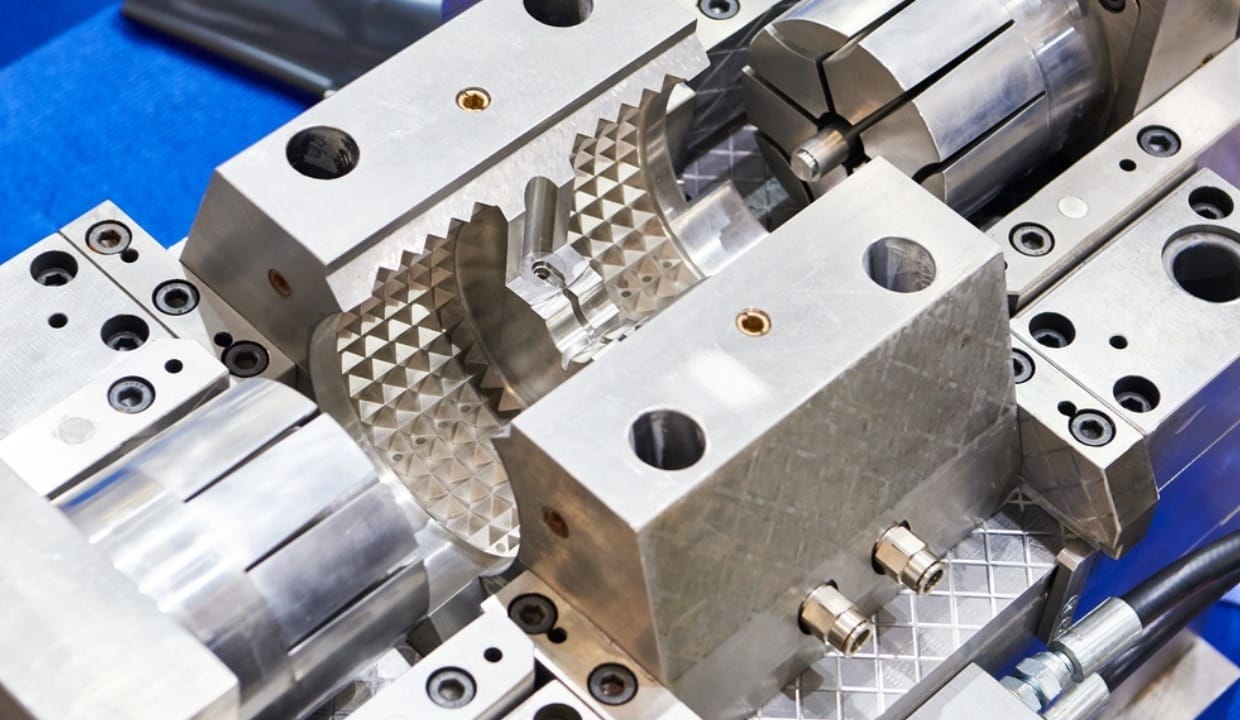
Melt flow rate or melt volume-flow rate can help compare grades under specified test conditions, but it is not a complete simulation of cavity filling and should not be compared blindly across unrelated polymer families. A robust decision combines supplier rheology data, part geometry, mold engineering, and trial evidence.
A Practical Material Selection Workflow
- Define the application: document loads, temperatures, chemicals, environment, service life, appearance, regulations, and failure consequences.
- Mark critical requirements: separate mandatory values from preferences and identify how each requirement will be verified.
- Shortlist material families: eliminate families that clearly fail the thermal, chemical, structural, optical, or regulatory needs.
- Select candidate commercial grades: compare current supplier datasheets, processing guides, declarations, availability, color, and minimum order.
- Run DFM with the likely material: review walls, ribs, bosses, draft, gates, weld lines, shrinkage, cooling, ejection, and tolerance strategy.
- Prototype and test the right risk: prototype material and process should be representative when performance conclusions will be drawn.
- Mold trials and process-window development: evaluate fill, pack, cooling, dimensions, appearance, and critical performance with traceable material.
- Freeze the specification: record manufacturer, grade, color, additives, regrind policy, drying, acceptance tests, and approved alternatives under change control.
Common Material Selection Mistakes
- Specifying only “ABS,” “nylon,” or “food-grade plastic”: the requirement must identify an exact grade or an approval process for equivalent grades.
- Choosing from a generic property table alone: datasheet values use defined specimens and test conditions that may not predict a molded product.
- Ignoring moisture conditioning: especially for nylon, dry-as-molded and conditioned parts can behave differently.
- Adding glass fiber late: reinforcement changes flow, shrinkage, warpage, surface, weld-line behavior, and tool wear.
- Assuming clear means the same thing: optical transmission, haze, color, stress, scratch, UV, and impact targets must be defined.
- Assuming a flame rating applies universally: confirm the recognized grade, color, thickness, and application requirement.
- Changing suppliers without validation: nominally similar grades may require different molding conditions and can shift dimensions or performance.
- Optimizing resin price instead of total cost: cycle time, density, scrap, secondary operations, maintenance, and field failures belong in the decision.
Material Information to Include in an Injection Molding RFQ
If a grade is already approved, provide the manufacturer and complete grade designation—not only the resin family. If selection is still open, include:
- Part application and expected service life
- Mechanical loads, temperature range, chemicals, UV, moisture, and cleaning exposure
- Required color, gloss, texture, transparency, and cosmetic zones
- Critical dimensions and functional interfaces
- Flammability, food-contact, medical, environmental, or customer-specific documentation
- Overmolding, inserts, bonding, welding, painting, plating, or assembly needs
- Annual and lifetime volume, target launch, and molding location
- Policy for regrind, recycled content, alternate grades, and traceability
Sharing these requirements allows the molder to challenge assumptions before they become steel. It also makes quotations easier to compare because suppliers are working from the same technical basis.
Häufig gestellte Fragen
What is the best plastic for injection molding?
There is no universal best plastic. PP may be ideal for a living hinge, PC for an impact-resistant transparent cover, POM for a low-friction mechanism, and glass-filled PA for a stiff structural part. The best grade is the one validated against the application and manufacturing requirements.
What is the cheapest injection molding material?
Commodity resins such as PP and PE often have lower raw-material cost than engineering plastics, but resin price alone does not determine part cost. Density, cycle time, scrap, drying, assembly, maintenance, and product life can change the economic result.
Which injection molding materials are transparent?
Transparent candidates include suitable grades of PC, PMMA, copolyesters, and certain styrenic materials. Selection depends on impact, scratch, UV, chemical, optical, temperature, and regulatory requirements. Mold polish and process control are also essential to final clarity.
Which materials are suitable for outdoor molded parts?
Weatherable grades of ASA, PMMA, stabilized PC, PP, and other polymers may be considered depending on the application. Outdoor suitability must account for UV, heat, moisture, color change, impact retention, chemicals, and exposure duration; a generic polymer name is not enough.
Can recycled plastic be used in injection molding?
Yes, when a suitable recycled grade is available and the application allows it. Source consistency, contamination, moisture, degradation history, color, odor, mechanical variation, regulatory restrictions, and traceability must be controlled. The required recycled-content claim and verification method should be defined before validation.
Can a material be changed after the mold is built?
Sometimes, but the change may affect shrinkage, dimensions, warpage, gate performance, cooling, ejection, appearance, cycle time, and testing. A substitute grade should go through engineering review and trial validation before production approval.
Choose the Material and Mold as One System
Material selection is not a purchasing decision isolated from product and mold design. The polymer grade affects how the cavity fills, shrinks, cools, ejects, looks, assembles, and performs throughout the product’s life. Early cooperation among the product designer, material supplier, moldmaker, molder, and quality team reduces late changes and creates a more robust production process.
Rilong Precision Mold supports material review, DFM, mold design and manufacturing, mold trials, plastic injection molding, inspection, and assembly. If you have a 3D model, drawing, expected volume, and application requirements, contact our engineering team for a manufacturability and material discussion before tooling begins.
Technical references: ISO 1043-1 defines standardized symbols and abbreviated terms for basic polymers. ISO 294-1 provides principles for reproducible injection molding conditions for thermoplastic test specimens. UL Solutions explains the controlled tests and classifications used for plastic flammability. The U.S. FDA food-contact inventory links authorized substances to specified uses and conditions of use.