






Hair styling tool manufacturing: This article explains the key design, material, process, quality, and production considerations that engineers and sourcing teams should evaluate.
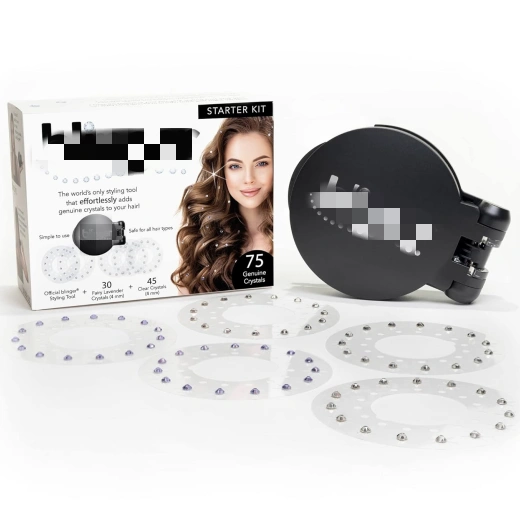
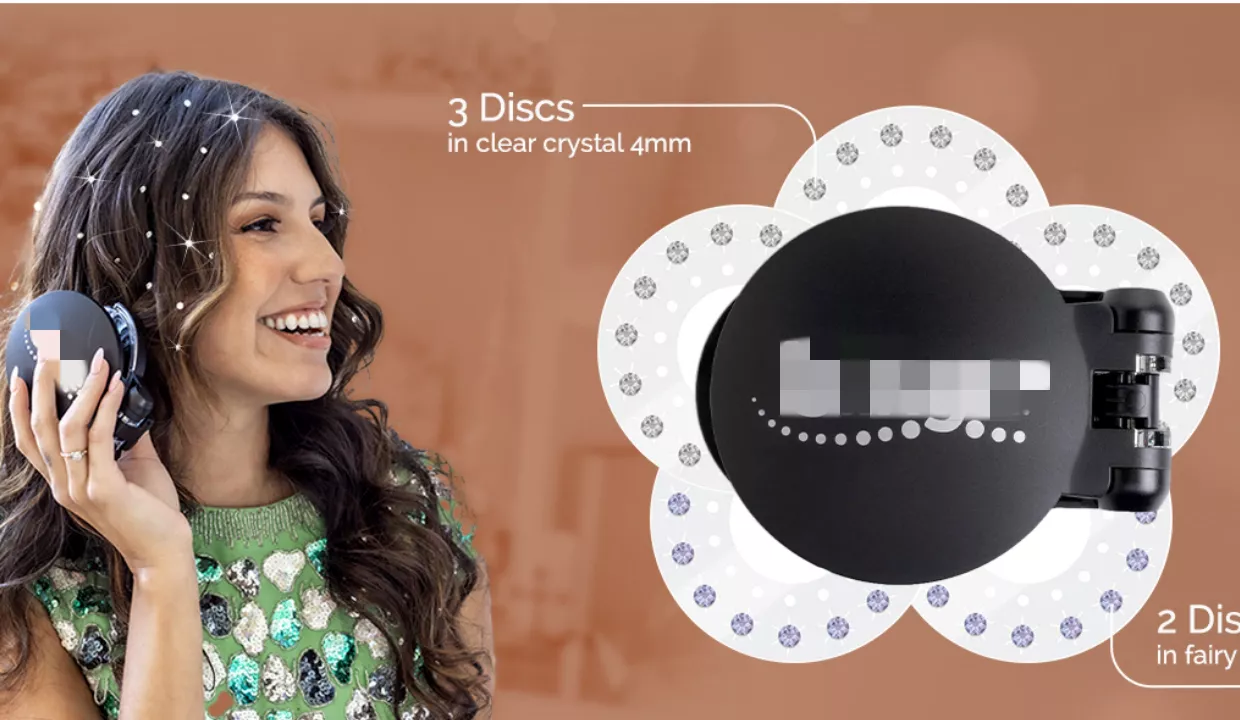
A US customer approached Rilong with a working prototype for a hair styling device that applies decorative crystal gems to hair. The customer needed more than an injection molding supplier: the project required design refinement, plastic component production, crystal-disc manufacturing, product assembly, retail packaging, and coordinated delivery for multiple sales channels.
Rilong supported the project from prototype review through stable mass production. The completed production line now supports an output of up to 20,000 finished units per month.
To protect our customer’s intellectual property, identifying logos and confidential product details have been omitted in accordance with our non-disclosure agreement.
Project Scope
- Design and manufacturing-drawing optimization
- Prototype testing and design verification
- DFM review for more than 10 plastic components
- Injection mold development and molded-part production
- ABS and Delrin component manufacturing
- Crystal-disc sourcing and production-process development
- Component inspection and finished-product assembly
- Blister packaging, printed artwork, and instruction sheets
- Final packing for Amazon, salon, and retail distribution
Managing these activities through one manufacturing partner reduced the number of suppliers the customer needed to coordinate. It also gave the project team better control over component fit, assembly quality, packaging completeness, and delivery timing.
Starting From the Customer’s Prototype
The customer supplied an initial prototype and product concept. Before production tooling was finalized, our engineering team reviewed the design and drawings to identify features that could affect molding, assembly, and repeated product use.
For a multi-component handheld product, design for manufacturing involves more than checking whether each part can be molded. Components must locate correctly during assembly, maintain practical clearances, avoid unnecessary molding complexity, and continue to function after repeated operation. Several prototype iterations were completed before the production design was released. This allowed design changes to be evaluated before the complete tooling and production setup was committed.
Material Selection for the Molded Components
The device contains more than 10 injection-molded plastic parts. Most components are manufactured from ABS, while several functional parts use Delrin.
Why ABS Was Used
- Reliable mold filling for housing and external components
- Consistent cosmetic appearance
- Useful impact resistance for a handheld consumer product
- Good dimensional stability
- Compatibility with common finishing and assembly processes
Why Delrin Was Used
Delrin was selected for specific functional components that required lower friction, better wear resistance, and repeatable mechanical movement. Material selection was based on the function of each component rather than applying one resin to the complete product.
Design for Injection Molding and Assembly
The design review considered the relationship between molded-part quality and final assembly. The engineering review covered the areas that commonly influence a product of this type:
- Nominal wall-thickness consistency
- Ribs and bosses around fastening points
- Draft for reliable part release
- Parting-line and ejector-mark locations
- Fit between moving and stationary components
- Assembly clearances and component orientation
- Cosmetic surface requirements
- Repeatability between production batches
Prototype testing helped verify component fit and allowed the team to make adjustments before the production design was frozen. This reduced the risk of discovering an assembly conflict only after production molds had been completed.
Developing the Crystal-Disc Production Process
The crystal disc was one of the more challenging parts of the project. The production method needed to arrange the decorative crystals consistently while remaining practical at the customer’s target volume.
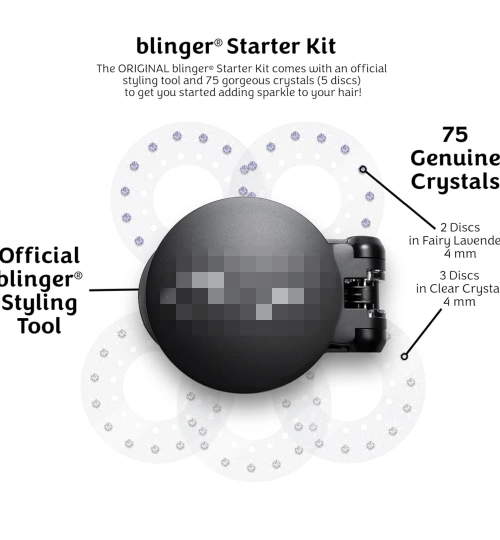
Rilong worked with a specialist disc-production partner and completed multiple production trials. The objective was to convert a labor-intensive concept into a repeatable process that could be coordinated with device assembly and packaging. After testing and process adjustment, the disc line reached stable operation and became part of the monthly production workflow.
Injection Molding, Inspection, and Assembly
After the component designs and molds were approved, the project moved into injection molding and assembly. Quality checks were applied at both component and finished-product levels.
| Inspection stage | Key checks |
|---|---|
| Molded components | Visible surface defects, flash, sink marks, incomplete filling, and color consistency |
| Critical dimensions | Features affecting component fit, alignment, and assembly |
| Functional assembly | Movement of operating components and correct part orientation |
| Finished product | Appearance, completeness, and basic functional verification |
| Retail package | Product, disc, instruction sheet, printed artwork, and packaging integrity |
Inspecting molded components before assembly prevents a dimensional or cosmetic issue from progressing into finished goods, where the cost of rework is significantly higher.
Retail Packaging and Fulfilment Preparation
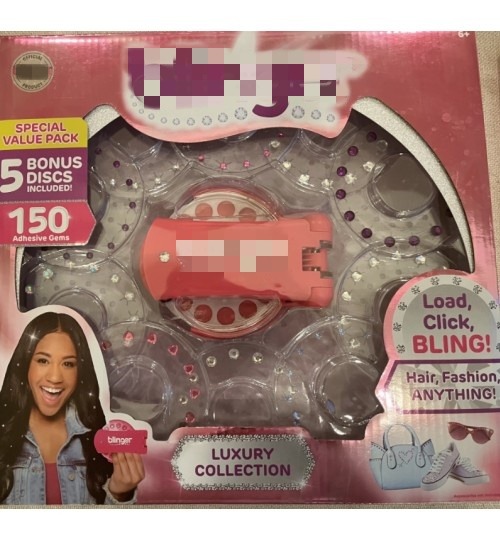
The customer required complete retail-ready products rather than loose molded parts. Rilong coordinated blister-pack production, printed artwork, instruction sheets, crystal discs, product assembly, and final packing inspection. Finished packages were prepared according to the customer’s requirements for Amazon, salon, and Walmart sales channels.
Handling molding, assembly, and packaging as one coordinated project meant that a change to one component could be reviewed against the complete product instead of being treated as an isolated part.
Production and Assembly Videos
The following videos show selected stages of component production, assembly, and packaging. Customer logos and confidential process details have been omitted.
Plastic Component Production
Crystal Disc and Component Preparation
Product Assembly
Assembly-Line Inspection
Finished Product and Packaging
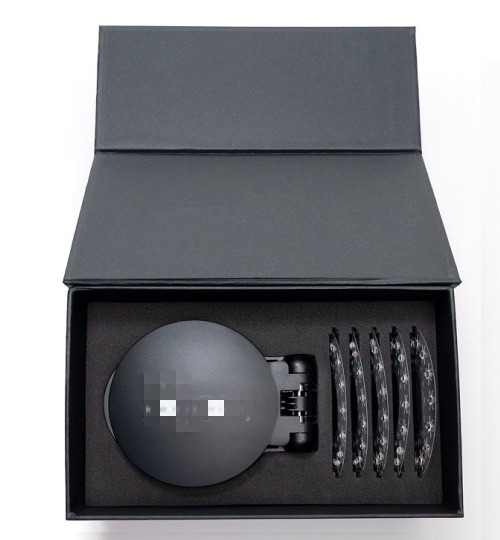
Finished Product

Project Result
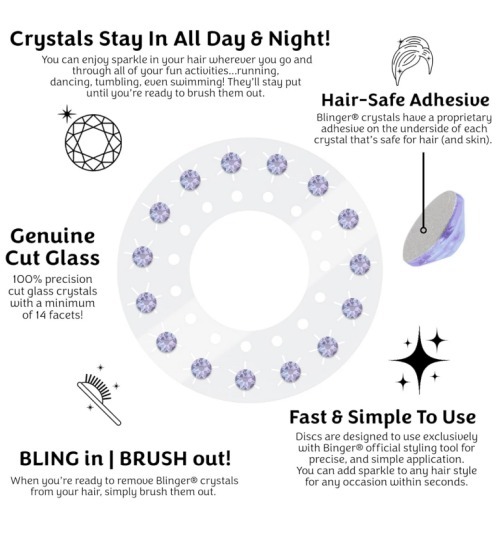
The project progressed from an early prototype to a stable production and assembly process with capacity for up to 20,000 finished units per month. The customer received a production-ready design, more than 10 molded components, coordinated ABS and Delrin production, a repeatable crystal-disc process, finished-product assembly, and retail-ready packaging through one managed supply chain.
This case demonstrates the value of involving the manufacturing team before design release. Early DFM and prototype testing reduced tooling risk, while coordinated molding, assembly, and packaging simplified the transition to mass production.
Need a Manufacturing Partner for Your Consumer Product?
Rilong supports projects that require more than individual molded parts. Our services cover mold design and tooling, plastic injection molding, component sourcing, assembly, packaging, and production coordination. Contact our team to review your prototype, CAD files, or manufacturing requirements.
Note: In accordance with our NDA, product logos and identifying customer information have been omitted.